

By Dele Moses
The Presidency has accused the former Vice President and presidential candidate of the African Democratic Congress (ADC), Atiku Abubakar, of not taking a definite position on his declaration that he would restore fuel subsidy for the people of the country to understand him.
The presidency said statements by Atiku and his media aides on the proposed restoration are contradictory and wonder if the presidential candidate is playing politics with the subsidy
After Atiku had declared that he would restore fuel subsidy because its removal is not allegedly seen to benefit the masses it was meant for, a media aide of his gave explanation that restoration would be for a temporary time and be later phased out while another aide said a predetermined date would not be set for the phasing out of the restored subsidy.
After the explanations by the two media aides, Atiku himself insisted that “My position has not changed and will not change” as he now described the subsidy planned for reatoration as “targeted subsidy.”
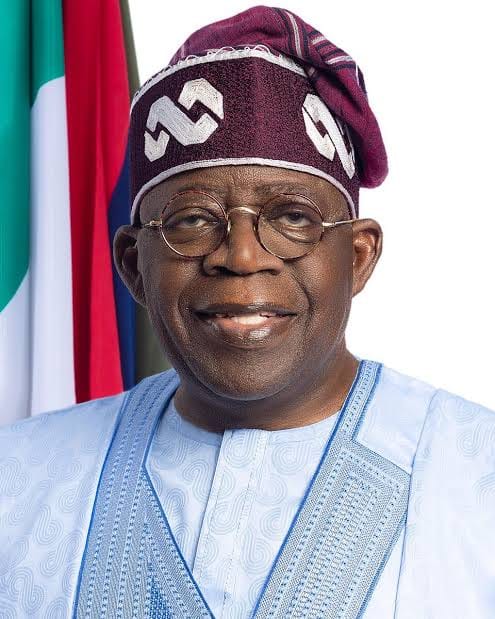
But the presidency in a statement issued by Bayo Onanuga, the Special Adviser (Information and Steategy) to President Bola Tinubu said Atiku was shifting positions about his declaration of plan to restore the subsidy.
The presidency said Atiku was “suffering from a lack of basic understanding of his newfound policy prescription.”
The statement while noting that people of the country had, within a week, heard three differing explanations on what Atiku planned to do about restoration of subsidy said this was not merely a matter of semantics but a serious policy contradiction.
The presidency said the people of the country deserved clarity and not policy by trial and error.
The statement reads: “The latest comments by former Vice-President Atiku Abubakar on petrol subsidy raise a fundamental question: is he seriously proposing an economic policy, or is he simply playing politics with the temporary discomfort Nigerians face?
“Within a week, Nigerians have heard three different explanations of what an Atiku administration would do about petrol subsidy. The confusion has now become impossible to ignore.
“First, Atiku’s spokesperson, Paul Ibe, said Atiku would restore petrol subsidy if elected president and later phase it out. Ibe described it as a temporary intervention intended to give Nigerians and businesses room to recover.
“Then came a clarification from another senior aide, Phrank Shaibu, who said Ibe’s statement was an “unauthorised and misleading characterisation” of Atiku’s position. According to Shaibu, Atiku would not set a predetermined date for ending the subsidy. Instead, it would remain until domestic refining expands, supply stabilises, competition deepens, and the market can deliver affordable prices without government support.
“But just hours later, Atiku himself intervened and effectively overruled that clarification. He insisted that his position “has not changed” and that he would restore what he called a “targeted subsidy” if elected president. He also said, “I will restore targeted subsidy and put purchasing power back in the hands of Nigerians.”
“This is not merely a matter of semantics. It is a serious policy contradiction.
“If Atiku’s position has not changed, why did one of his principal aides say the subsidy would be temporary and phased out? Why did another senior aide have to publicly disown that explanation and introduce a completely different framework based on market conditions? And why did Atiku then step in to reaffirm the original position?
“Nigerians deserve clarity, not policy by trial and error.
“More fundamentally, Atiku’s argument appears to misunderstand the dynamics of the petroleum market. Petrol does not become cheap simply because government orders a subsidy or because competition is expected to emerge. Several factors, including international crude oil prices, exchange rates, refining costs, transportation, distribution, and other market costs, influence pump prices.
“Competition can improve efficiency and margins, but it cannot magically insulate Nigeria from global crude oil prices or other input costs.
“There is also a troubling oversimplification in Atiku’s argument that “when fuel rises, transport rises. When transport rises, food rises. When food rises, families suffer.” Of course, energy and transportation costs affect food prices. But petrol prices alone have never caused food inflation. Nigerians experienced rising food prices even during the years when petrol subsidy was in place.
“Agricultural productivity, insecurity, exchange rates, logistics, storage, flooding, input costs, money supply and supply constraints also matter. A serious economic programme must address these factors, as President Bola Ahmed Tinubu has been doing for the past three years, rather than reduce the entire cost-of-living crisis to petrol prices.
“We therefore urge Atiku to stop shifting positions and explain precisely what he means by “targeted subsidy”: how much will it cost, who will benefit, how will beneficiaries be identified, how will it be funded, and what objective economic conditions will determine its eventual termination?
“Nigerians cannot afford another opaque and potentially costly subsidy regime dressed up in new language.
“The former vice-president should be honest with Nigerians: either he has a coherent, costed, and workable petroleum policy, or he is simply playing politics with a policy that has significantly restored fiscal health to the three tiers of government and stabilised the macroeconomic environment.
“The economy is too serious for policy somersaults, incoherence, destructive populism and election gimmicks.
“Atiku says his subsidy will follow the barrel of crude. Is he aware that refined petrol only constitutes 45 per cent of the by-products of a refined barrel of crude? A barrel yields other products, such as aviation fuel, kerosene, and diesel, which were deregulated many years ago.
“Diesel, which the Obasanjo-Atiku administration deregulated in 2004, accounts for roughly 25% of the barrel. Jet Fuel and Kerosene make up about 9% of the barrel. Kerosene and jet fuel were deregulated in 2009, and subsidies removed in 2016.
“About 10% to 15% of the barrel creates base ingredients for synthetic rubber, nylon, polyester, and plastics used in everyday goods like toothbrushes, cups, and packaging.
“Asphalt makes up about 2% to 4% of the barrel. Hydrocarbon Gas Liquids (HGL), like propane and butane, make up about 4%. Lubricants and Waxes constitute about 1% to 2%. Petroleum coke and sulfur form the solid residue left from refining.
“Will Atiku subsidise all these by-products of the barrel as well, since kerosene is used by the underprivileged to cook, and many homes and factories use diesel to power generators and delivery trucks? And will he allow the refineries he will supply discounted crude oil to profit from 55 per cent of the by-products, while focusing subsidy only on petrol, his obsession?
“The former Vice President is definitely suffering from a lack of basic understanding of his newfound policy prescription.”