

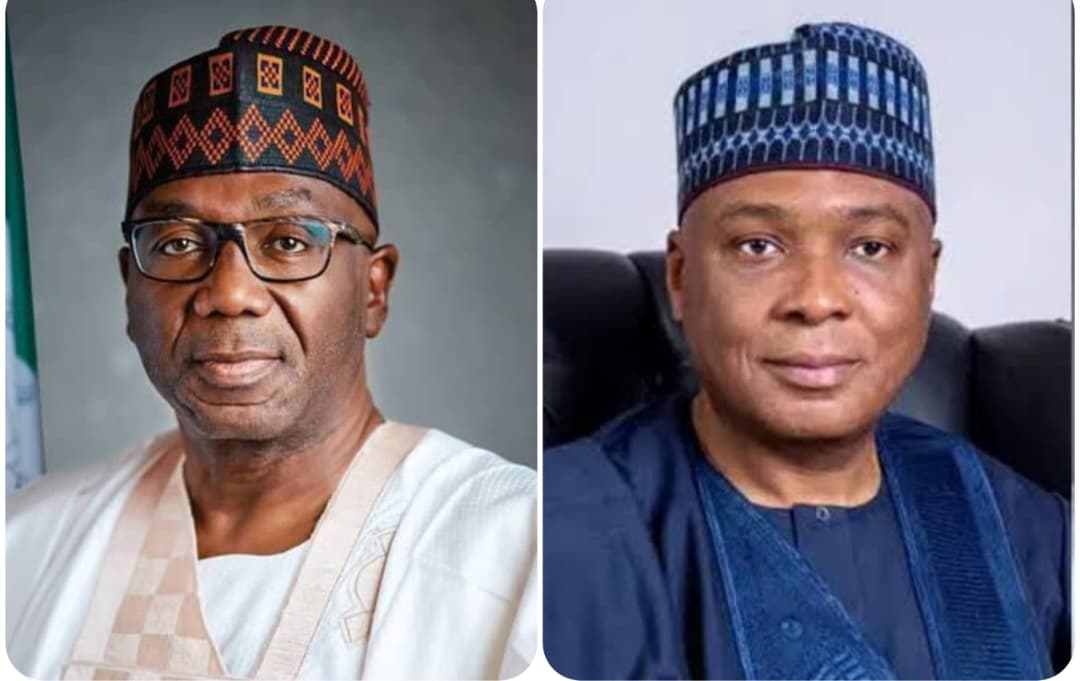
By Dele Moses
After winning his second term of office as governor of Kwara State in 2007, Bukola Saraki appeared to begin to be establishing himself as a force in the politics of the state and by 2011 during the next general election he really proved he has grown to be a powerful force as he spearheaded his party, the Peoples Democratic Party (PDP) to win the election with someone else being the governorship candidate.
Saraki who has exhausted the two maximum terms he could have as agovernor by virtue of the provisions of the nation’s constitution went for senatorial election and won it while the person he endorsed to be the candidate of the party for the governorship election also won the election as the party also won all other seats for National Assembly contested in the state
Saraki’s father, Dr Olusola Saraki used to be the kingmaker and godfather in the state politics and it was while the Saraki senior was maintaining this status that the Saraki junior contested the governorship election in the state for the first time in 2003. He won the election with the influence of his father while his victory for the second term of office in 2007 was also to a great extent due to the influence of the father
The elder Saraki had been in the control of the politics of the state since the second republic when he endorsed his preferred aspirant to win the governorship ticket of his party, National Party of Nigeria (NPN) and went further to influence his victory at the governorship election while four years later after an unresolved disagreement between him and the governor, he tacitly supported candidate of an opposition party who won the 1983 election.
The politician who in the second republic served as the Senate Majority Leader was also the kingmaker in 1991 during the aborted third republic when the candidate of his party, Social Democratic Party (SDP), won the governorship election to become the next elected governor of the state in January 1992.
When the present fourth republic started in 1999 he was also the kingmaker as his endorsed candidate of the All People’s Party (APP) won the governorship election while the party won the majority seats in the state House of Assembly.
In 2003, he further proved his firm grip of the state politics as the kingmaker and godfather when his 1999 anointed candidate got seperated from him and faced his new annointed candidate at the poll. The new annointed candidate who is Saraki junior defeated the former annointed candidate who was then the incumbent governor.
Saraki senior continued to be the kingmaker and godfather until 2011 when his son, the Saraki junior, effected a change with the victory, at the poll, of his own governorship candidate whose candidature the father opposed.
A year later, the elder Saraki died and the Saraki junior effectively took over as the leader, kingmaker and godfather in the politics of the state. In the next election in 2015, he led his party to victory with his 2011 endorsed governor wining his second term of office while he won his own second term as a senator and went ahead to emerge the Senate President.
He was, in some respects, in step with his late father in his functioning as leader, kingmaker and godfather. He determined the governorship candidates and candidates of most other seats for the party as did his father.
However it seemed that he operated differently from his father in some other respects. His father appeared to satisfy himself with wining majority without insisting on wining all seats but, Saraki, while in charge, unlike his father, seemed to be disposed to zero sum politics. During his second term of office when he gradually began to be in charge side be side his father, his party had won 22 of the 24 seats of the state House of Assembly while an opposition party, the now defunct Action Congress of Nigeria (ACN) won the remaining two seats where the defunct party appeared to be very popular at that time. He seemed not to be satisfied with this and did not relent until his party, after ruling of the election petition tribunal, had the two remaining seats to make the party be in absolute control of all the seats in the state House of Assembly.
In choosing candidates, especially governorship candidates, his father seemed to be reticent in dislosing who his preferred candidate his for strategic reason and he apears to have followed in the footsteps of the father on this. However, it did not seem that the father delibrately asked a party member to join the race for the party governorship ticket when he knew that he would not support such a member. But, in his own case, there were complaints that he bluffed party members into joining such race when he had known that he has had his choice of candidate. Some of the affected aspirants have reportedly said to have expressed their disappointment by stopping to be his associates.
He also seemed not to have been as folksy as his father was in interpersonal relationship with party supporters. The father though funded his parties in the state still brought himself to a level that he did not maintain a conspicuous stratified distance in his relationahip with the party stalwarts.
Bukola Saraki, while also funding the party did not seem to bring himself to this level and perhaps, for this reason, he did not appear to have as many as died-hard loyalists his father had. Some of his associates even alleged that he was supercilious
To some extent the alleged inclination to solely decide candidates for party, failure to accommodate opposition even in slightest minority position, bluffing associates into joining race for party’s governorship ticket while hiding one’s intention, and alleged lack of folksy relationship with party stalwarts and his associates might have led Saraki, a former 2-term governor, to having his structure in the state lopped off.
One of the delcation the “O to ge” (enough is enough) movement that brought down Saraki’s control of politics of the state in 2019 echoed was “A fe mi fun e mo’ (i.e. We do not want “I give you any longer”). By this the people were declaring that enough is enough of the practice in the state where a godfather solely determine choice of candidates of the party in an election instead of allowing all aspirants to really prove their mettle to win party’s ticket.
The movement did not just involve only politicians who had never been in the camp of the Sarakis before but also include politicians who had one time or the other been in the camp previously.
The APC, the platform the movement used won the 2019 election with a total victory and repeated the feat in 2023 making unrealisable efforts by Saraki to, in that year, relaunch himself to his former status as the kingmaker and leader of the state politics.
The governorship candidate of the APC in 2019 was Abdulrahman Abdulrazaq. He won while candidates of the party for the other posts also won their elections. Abdulrazaq after emerging the governor became the leader of the APC in the state and he led the party to another victory in 2023 where he won a landslide victory to earn second term of office while other candidates for other seats also won as the party was still united to sustain the o to ge movement.
However, after Abdulrazaq emerged the leader of the APC as the governor it appeared that practices complained of Saraki were begun to be found with him (Abdulrazaq). This began in 2022 during the party primaries en route the 2023 election when some members complained of him allegedly imposing candidates on the party.
He also appears not to be satisfied with wining majority but wining all as a seat in the state House of Assembly earlier declared to be won by an opposition party in 2023 election was eventually, through election petition tribunal, taken over by his APC which had won 23 of the 24 seats in the House.
Though he appears not to look snobbish in his interpersonal, relationship with many members of the party, there is however complaint that he does much about listening but almost nothing about view expressed, complaints or suggestions made to him.
The complaint of imposing candidates on the party now appeared to have weakened unity of the party that aided its victory in 2019 and 2023 as the party is preparing for another round of election in 2027.
In the governorship primary election conducted earlier this year, the encouragement of aspirants into the contest, while keeping a different agenda as it is the complaint against Saraki was witnessed more audaciously in the primary election. The governor had, two days before the election, announced his endorsement of a particular aspirant as choice candidate but while the election was going on it was suddenly cancelled and refixed for the following day while in the rescheduled primaries, another candidate different from the earlier endorsed one but who long ago many had suspected was the real choice of the governor was announced the winner of the primaries.
The other aspirants including the ditched one saw the wining one as being imposed on the party by Abdulrazaq.They made their grievances known and demanded that the grievances be addressed to ensure fairness and justice but the party though set up committee to address the grievances eventually did not appear to do much to take care of interest of the aggrieved.
The complaints against Abdulrazaq entail that he did not only allegedly impose an aspirant as governorship candidate on the party, he himself has also emerged a senatorial candidate while his preferred aspirants have also been given the party’s ticket as candidates for all other posts at the expense of other chieftains of the party who all aided the party to power in the state with the o to ge movement.
Some of the aggrieved members have left the party and have pitched tent with some of the other parties in the state. After this had happened, the party commenced a fresh move for a reconcilation that could help it go into the general election with unity. This move is perhaps targeted at aggrieved members who are still in the party but who still retain their grievances.
Abdulrazaq, the APC leader, will be leading the party to the 2027 election as he did in 2023 but he is not likely to be leading the APC that is as united and strong as it was in 2023 largely because of leadership that apears to undermine importance of nipping in the bud or containing intra party crisis.
Saraki who will also be leading his party, the PDP, to the general election however appeared to have been shaped by experiences to be more circumspective as a kingmaker and godfather.
He has made enormous concession to ensure that the party gain enough strength to compete favourably in the election. While he is personally not contesting for an office he has aided some other influential chieftains of the party to win the party’s tickets for the election.
He has also led the party to hash out an arrangement with the aggrieved APC members to assumed influential status in the party once they defected to the party. Some of the defecting politicians have been given tickets to contest senatorial and some other posts.
Saraki appeared to have his choice of governorship candidate who eventually became the party’s candidate through a consensus arrangement. The candidate, though not a veteran politician but seems to be a financially self-made man and not a one made through Saraki’s investment on him.This, perhaps shows that Saraki is more interested in the person with whom his party can win the governorship election than the person who will only be in office while he (Saraki) would be pulling the string.